
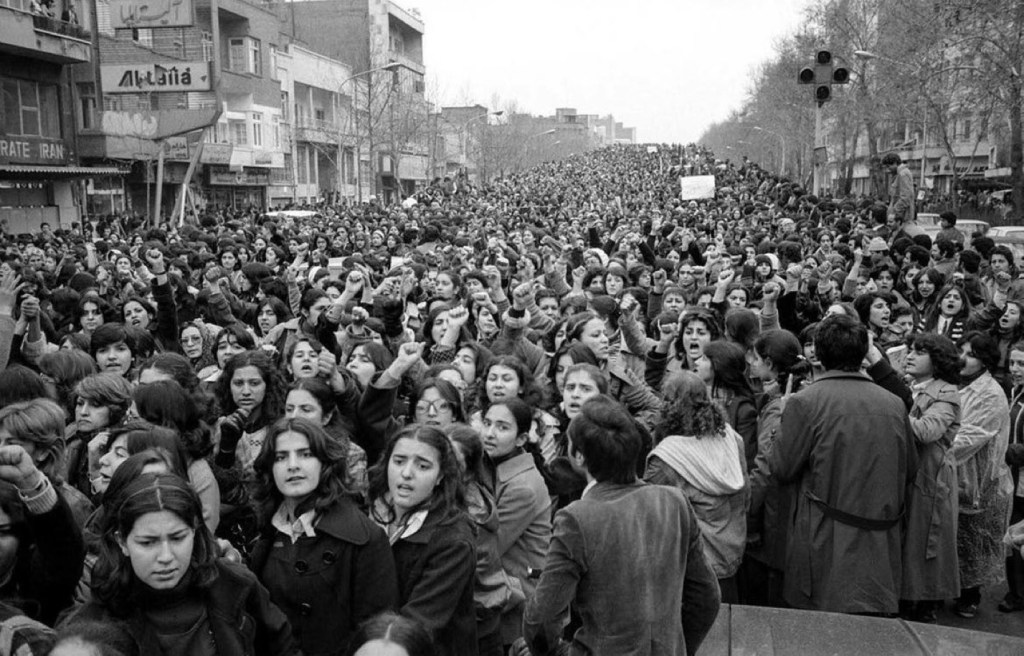
“In Tehran, Iran, in the year 1979, a significant event unfolded that marked a crucial moment in the struggle for women’s rights in the country. Approximately 100,000 Iranian women gathered and marched against the newly implemented hijab law, which required all women to wear the Islamic headscarf, known as the hijab, in public spaces. This historic demonstration showcased the determination and unity of Iranian women who were striving for greater freedom and equality in their society.
The march took place shortly after the 1979 Iranian Revolution, which brought about significant changes in the country’s political and social landscape. The revolution resulted in the establishment of an Islamic republic led by Ayatollah Ruhollah Khomeini, who implemented a series of conservative policies aimed at enforcing Islamic principles in all aspects of life.
One of the most notable changes introduced by the new regime was the compulsory hijab law, which required women to cover their heads and dress modestly in public. This law was seen by many Iranian women as a symbol of oppression and a violation of their personal freedoms. It was also seen as a stark departure from the progress made by women in Iran prior to the revolution, where many had enjoyed relatively greater freedom and independence.
Fueled by a desire for change and a refusal to be silenced, Iranian women from various backgrounds and age groups united to challenge the hijab law. On the day of the march, tens of thousands of women filled the streets of Tehran, defiantly removing their headscarves and raising their voices against the imposition of the law. They carried banners and signs advocating for women’s rights, personal choice, and gender equality.
The march drew international attention, with media outlets around the world covering the unprecedented scale of the protest. Images of Iranian women marching courageously, expressing their discontent, and demanding change became iconic symbols of the struggle for women’s rights in Iran.
The government responded to the protest with a mixture of repression and attempts at appeasement. While some women were arrested and faced harsh consequences, the sheer size and determination of the protest forced the government to take notice. Over time, the movement against the compulsory hijab law gained momentum, and Iranian women continued to challenge the oppressive regulations through various means, including civil disobedience and social activism.
The 1979 march against the hijab law in Tehran remains a crucial moment in the history of women’s rights in Iran. It highlighted the strength and resilience of Iranian women who refused to be silenced and fought for their rights and freedoms. The legacy of this march continues to inspire and motivate women around the world who strive for gender equality and the right to self-determination.”
 REFLECTIONS