
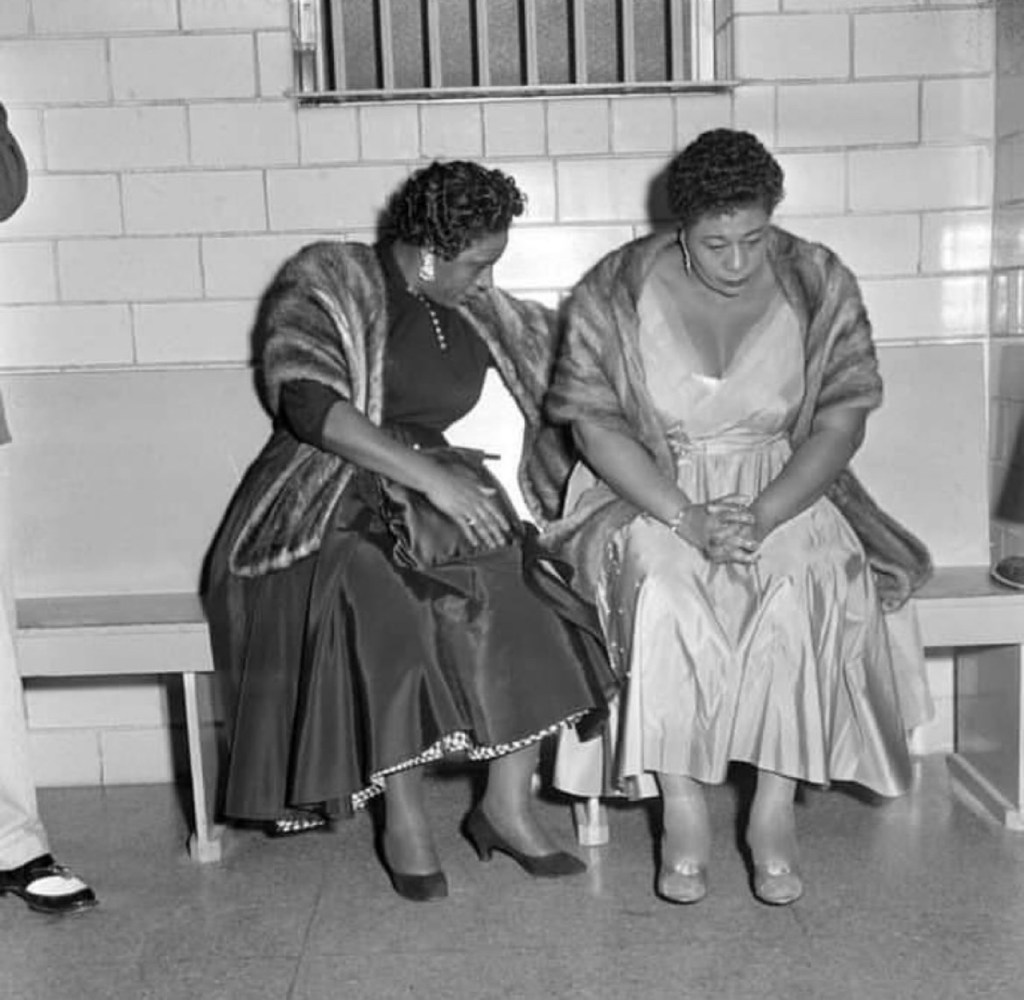
Ella Fitzgerald found herself in a jail cell in 1955 for singing to an integrated audience. When American jazz producer and concert promoter Norman Gran rented Houston’s Music Hall, he included a non-segregation clause. He removed all signs designating “white” or “Black” in the bathrooms and refused to pre-sell tickets to prevent segregation. He recalls an incident: “A person approached me early at the concert hall, wanting to change seats because they were sitting next to a black person. I said, ‘No, you can have your money back, but we’re not changing your seat.’ The customer took the refund. We did everything we could to ensure integration.”
Despite no disturbances in the integrated crowd, the police showed up to arrest the performers between sets. They arrested the group on gambling charges because some jazz musicians were playing craps, while Fitzgerald was sipping coffee. The group was taken to the police station, where one officer asked Fitzgerald for her autograph. After paying a fine, they were released and able to perform their second set for an unsuspecting audience.
In a 1963 interview, Fitzgerald discussed her frustration with dealing with racism in the South: “Maybe I’m stepping out of line, but I have to say it because it’s in my heart. It’s disheartening that we can’t perform in certain parts of the South like we do overseas, where everyone comes to enjoy the music without prejudice. I used to stay silent because people would say, ‘Showbiz folks should stay out of politics,’ but we’ve been embarrassed so much. Fans can’t understand why we don’t play in Alabama or why we can’t have a concert. Music is music.”
 REFLECTIONS