
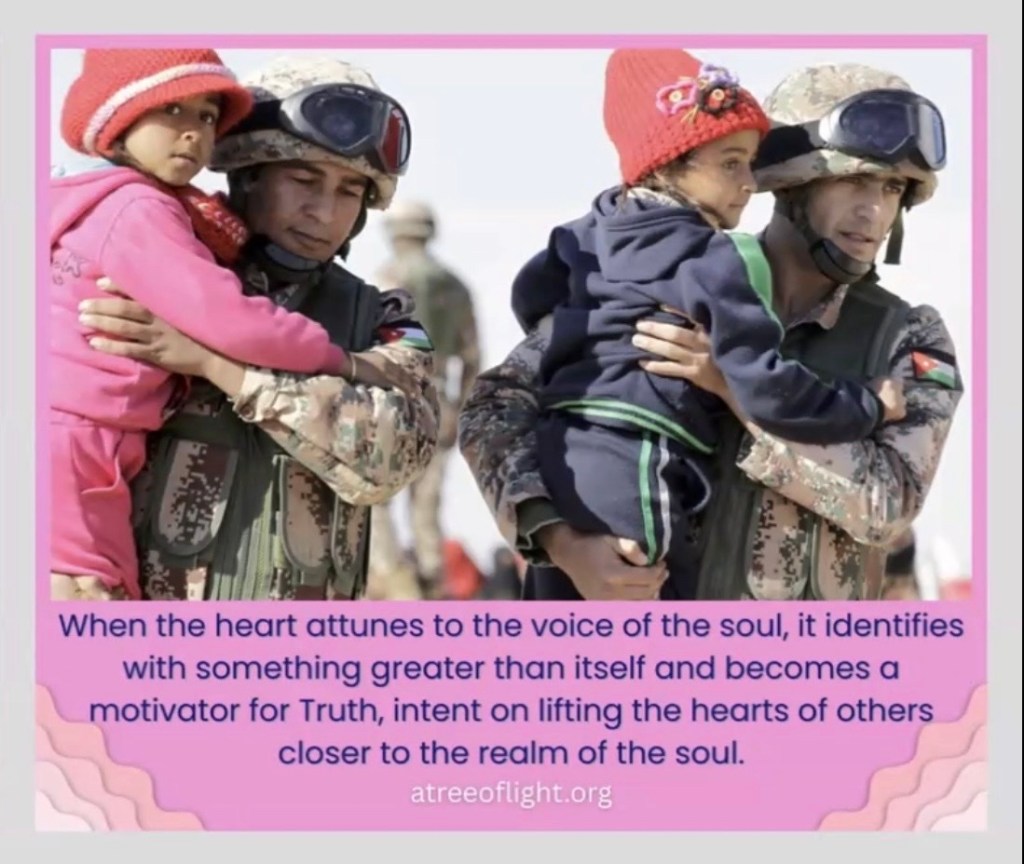
In the immediate aftermath of trauma or disaster, people tend to move toward one another rather than away. The usual social boundaries fall back, and a basic human reflex takes over: protect the vulnerable, stabilise the injured, and offer whatever comfort is possible. This isn’t idealism—it’s a well‑documented pattern seen across earthquakes, conflicts, fires, and floods. Strangers carry children to safety, share food, give up coats, and stay with those who are frightened or alone. In these moments, love becomes a practical force: a willingness to act, to shoulder responsibility, and to recognise that someone else’s survival is tied to our own.
In moments like these, it becomes clear that the boundary between “us” and “others” is far thinner than we imagine.
 REFLECTIONS