
🦩
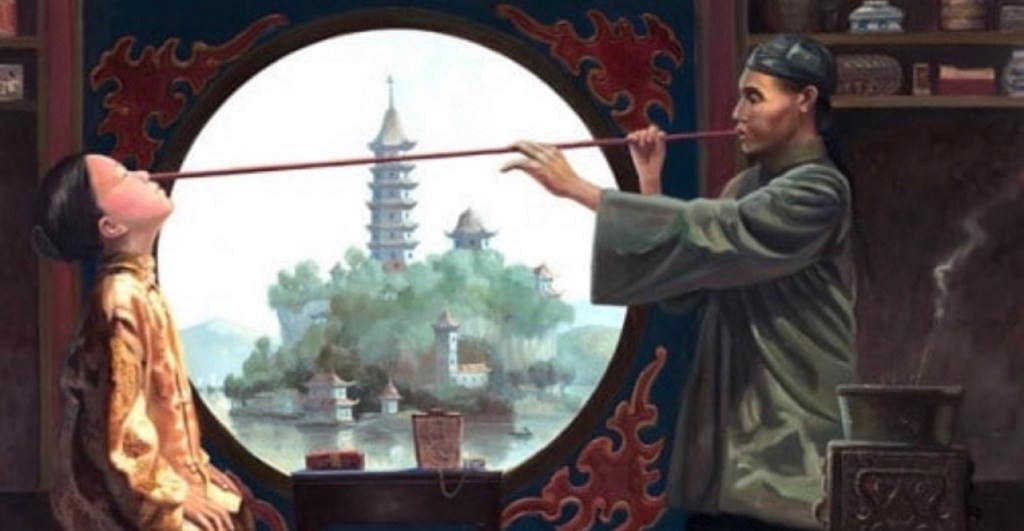
During the Ming Dynasty, powdered smallpox scabs were blown up the nose of the healthy. The patients would then develop a mild case of the disease, and once they recovered, they would be immune to it. Nevertheless, the technique did have a 1-3% death rate, which was still considerably lower than the mortality rate of smallpox, which was around 20-30%. The process of exposing a healthy person to infected material from a person with smallpox in hopes of providing immunity is called variolation.
The first written account of variolation describes a Buddhist nun living on a mountain named O-Mei Shan in the southern province of Szechuan, China. She began practicing variolation around 1022 to 1063 AD after making the astute observation that those who managed to survive smallpox never got it again. It wasn’t until 1796 when English Physician Edward Jenner discovered the vaccination for smallpox by injecting pus from a milkmaid’s cowpox sore into an eight-year-old boy and then attempting to infect him with smallpox six weeks later. The boy did not develop smallpox, indicating that the earlier exposure to cowpox protected him from infection.
🦩
 REFLECTIONS
Oh crikey! Although this method seems to have worked to prevent getting smallpox, it turned my stomach!
LikeLiked by 1 person
Yes. The procedure was literally in your face. . . but the essential reasoning behind was the same as it is today. The thought of inserting infected pus into a healthy person is also quite revolting, but if it works, it works. 👋
LikeLike