
Another beautiful article for all to hear…
“They spat tobacco at a Black teenage girl… because she dared to teach white children.” British Columbia. 1874.
Emily was only 18 years old when she unlocked the schoolhouse door and walked into history. But before she became one of the first Black teachers in Western Canada…her family had already fled one country just to survive another.
Emily Arabella Emma Stark was born during a time when Black families in America could lose everything simply because white people wanted it.
Her parents escaped California after racist laws stripped Black settlers of legal protection. White men could steal Black-owned land… and Black families often could not even testify in court to defend themselves.
So her family fled north to British territory carrying little more than hope, tools, and fear.
They crossed rough water to Vancouver Island and settled in the wilderness of Salt Spring Island, where survival itself became a daily fight.
Her father chopped through massive cedar trees by hand. Her mother cooked over open fires while wolves circled the dark forests at night. And Emily studied by candlelight inside a cold log cabin while rain hammered the roof.
That matters.
Because many people imagine Black history only through slavery or the American South. But Black pioneers were also fighting isolation, racism, and survival on the edges of Canada’s frontier.
Emily understood early that education was power. So she walked miles through mud and forest trails to attend school. And when white classmates refused to sit beside her… she still outperformed them.
At just 18 years old, Emily Stark passed the provincial teaching examination and became the first Black public school teacher known in British Columbia history.
Then came her first day at North Cedar School.
The white children walked into the classroom, saw a young Black woman standing behind the teacher’s desk… and froze. One boy spat tobacco juice directly onto the floor near her feet. He wanted humiliation. A reaction. Proof she did not belong there.
Instead, Emily calmly handed him a scrub brush. No screaming. No tears. No retreat. Just authority.
The boy dropped to his knees and cleaned the floor while the entire classroom watched. Then Emily turned toward the blackboard and wrote her name in chalk.
That moment was bigger than discipline.
It was a Black woman claiming intellectual authority in a society that barely believed Black people deserved equality at all. And she did it surrounded by people waiting for her to fail.
For years, Emily rode horseback through brutal weather to teach children whose parents often doubted her humanity before they respected her intelligence.
Still… she kept teaching. Kept showing up. Kept proving herself in rooms built to exclude people like her. But the cold classrooms and endless rides through rain slowly destroyed her health. Tuberculosis consumed her lungs.
By 1890, she was too weak to continue teaching. And at only 34 years old… Emily Stark died.
No grand national mourning. No giant newspaper tributes. No monuments celebrating her courage. Because history has often gone quiet when Black women are the ones carrying greatness.
But her family refused to let her disappear. They kept telling her story long after official records forgot to. That may be the most powerful part of all. Because Black history survives not only through textbooks… but through families refusing to let silence erase people who mattered.
Today, most people will never know her name. Yet generations of students walked through doors that women like Emily Stark forced open while enduring racism most modern people could not survive for a week.
And honestly… that raises an uncomfortable question:
How many Black pioneers were erased from history simply because society never expected them to matter in the first place?
May God bless all who suffer under such ignorance…
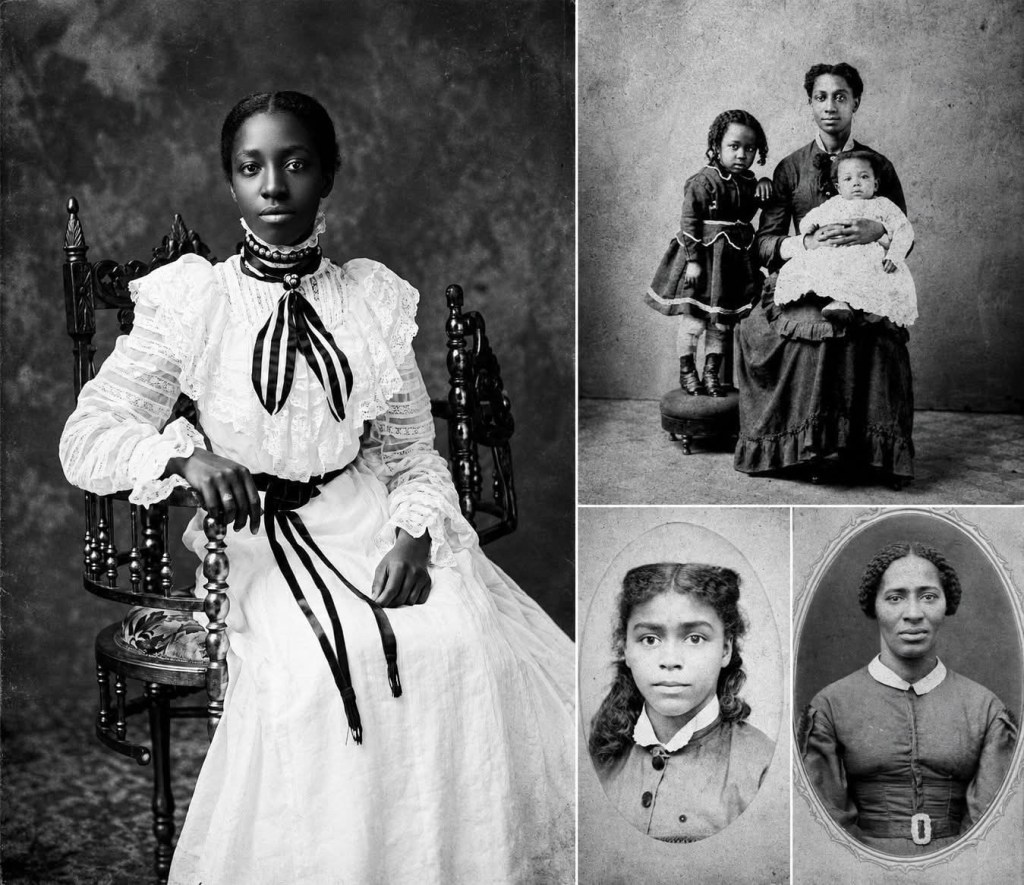
God bless her and all like her in this world
 REFLECTIONS